Webinar: Presumed Competency: Fitness Programs for Individuals with Neurodiversity
This presentation challenges traditional fitness models by centering the belief that all individuals regardless of ability are capable when provided with the right environment and support. Through the lens of presumed competency, attendees will learn how accessible fitness programming empowers neurodiverse athletes and provides opportunities for leadership, connection, and growth.
Attendees will gain practical strategies to adapt communication, motor coaching, and environmental design to match sensory and learning needs. We’ll explore the vital interaction between sensory processing, perceptual gross motor skills, apraxia/dyspraxia, and how these influence regulation and movement success. Attendees will leave with a deeper understanding of how to create fitness experiences that build trust, foster autonomy, and support lifelong physical and emotional well-being.
Learning Objectives
1. Define the concept of "presumed competency" and explain its significance in the design and delivery of accessible fitness programs for individuals with neurodiversity.
a. Understand how presuming competence promotes dignity, autonomy, and high expectations for all athletes.
b. Recognize the limitations of deficit-based models and how shifting to a strength-based approach transforms program design and coaching.
2. Identify key strategies to adapt fitness environments, communication methods, motor coaching, and overall coaching models to support athletes of all abilities and learning styles in making fitness accessible for individuals with neurodiversity.
a. Implement visual, auditory, and tactile communication strategies based on each athlete’s sensory preferences and processing style.
b. Use motor coaching techniques that break down movements into achievable steps, incorporate modeling, and build body awareness.
c. Design flexible fitness environments that accommodate sensory regulation needs, including space, sound, lighting, and pacing.
3. Understand how challenges with sensory processing, perceptual gross motor skills, and apraxia and dyspraxia need to be supported to lead to successful movement outcomes for individuals with neurodiversity.
a. Explore how sensory input impacts arousal, attention, and readiness to move, and how this informs fitness programming.
b. Identify common perceptual-motor challenges (e.g., body awareness, spatial orientation) and their influence on movement success.
c. Apply motor coaching techniques that scaffold skill development, support regulation, and build confidence in physical activity.
Speaker: Karen Hurley, Physical Therapist and Executive Director of ABL Fitness, Inc.
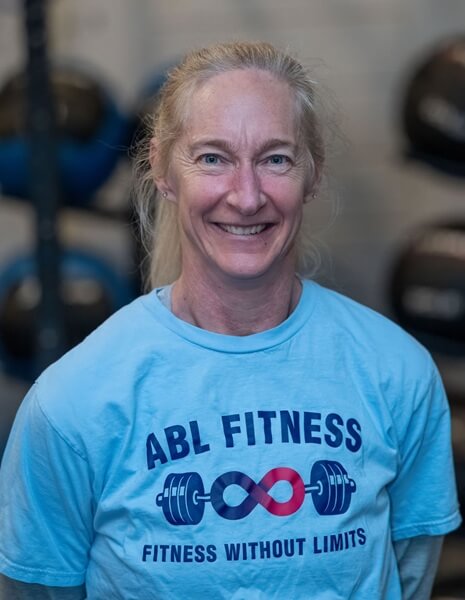 Karen Hurley is a nationally recognized leader in accessible fitness and neurodiversity-informed wellness. A former Division I gymnast at Brown University, Karen combines her athletic experience with a multidisciplinary background in physical therapy, special education, adaptive movement, and health coaching. She earned her Master of Science in Physical Therapy from Boston University and has dedicated her career to creating fitness environments where every individual is presumed competent and empowered to thrive.
Karen is the founder of ABL Fitness, a nonprofit organization that uses fitness as a platform for building independence, social connection, and lifestyle change. Her programs integrate motor coaching, sensory integration, and perceptual gross motor skill development, offering a model often described as the “IEP of fitness.” She also created the Peak Performance Playbook, a continuing education course certified by ACSM, NASM, and AFAA, to train professionals in neurodiversity-informed program design.
A former Assistant Professor at Curry College and a passionate community advocate, Karen has led Unified School programs with Special Olympics, inclusive district initiatives, and large-scale events that celebrate ability. Through her teaching, programming, and advocacy, she continues to challenge norms and inspire a more inclusive future for fitness and wellness.